Too Young to Care? Why Breast Density Matters Before 40
- zoeziegler32
- Feb 19
- 4 min read

Written by Zoe Ziegler
Sources linked at bottom of page
last updated: 2/25/26
Dense breasts are NOT something you can feel
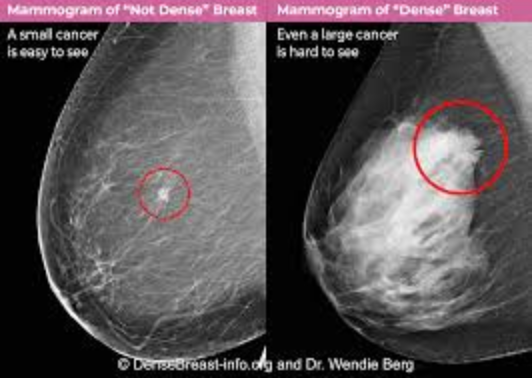
Having dense breasts is normal. The density of your breasts changes overtime, often decreasing as you get older. women who have denser breasts are more likely at risk of breast cancer. Geri Stengel Wrote how More than 40% of women ages 40 to 74 in the U.S. have dense breast tissue,Dense breast tissue can only be seen on a mammogram, and is seen in 7/10 cases of breast cancer. If I can’t feel it, then what does it look like? Fatty tissue appears dark on a mammogram, and dense tissue appears white. About half the women who have mammograms have dense breasts.” Jaimie Depolo writes. Feeling how stiff or fatty they are with your hands does not diagnose you with dense breasts. Having dense breasts can make your chance of breast cancer increase by almost 4 times. So who is more likely to have them?
Factors like being younger, being pregnant, breastfeeding, those who take hormone replacement therapy, or have a lower body weight are more likely to experience denser breasts.
But, breast cancer can happen at any age.The average risk of breast cancer in women is about 13%. Being comfortable with your body and self checking after your period. Doing at home checks for any lumps before average screening age (around 40) reduces your chance of “never seeing it coming.” Additional resources on these topics are available through the Herscreen Project.
What to do If you have dense breasts
Talk to your doctor about your personal risk of getting breast cancer, dense breasts are a not very known risk factor for breast cancer. Your doctor will consider other factors like your age, family history, etc. Though dense breasts can be considered more of a serious risk factor compared to family history. If you think that the density is something of concern, your doctor might suggest a Breast ultrasound,a machine that uses sound waves to make pictures, called sonograms, of areas inside the breast.. Or a Breast MRI,A kind of body scan that uses a magnet linked to a computer. The MRI scan makes detailed pictures of areas inside the breast.
Why Does Breast density matter before 40?
As I mentioned, women with dense breasts can have up to 4x higher risk of developing breast cancer compared to women with mostly fatty breasts. That risk concurrently exists at 25, 30, or 35 — not just at 40. And just because Dense tissue makes it harder for cancer to be seen on a mammogram, doesn’t mean that it's only issue. That's because this tissue is more biologically active, which can lead to more cell growth specifically because of connective tissue inside it. Dense tissue has been shown to decrease as you age. So, ironically young women should be paying more attention the years before a mammogram. And accumulating risks starts early, and is preventable with awareness.
Drinking Alcohol link, especially as a teen
Before we begin, this is the chemical function that alcohol does to your body, Alcohol may increase the risk of breast cancer by raising estrogen, which can accumulate risks over time. As well as reducing folate absorption(breaking down food), and damaging cell DNA. Drinking can lead to risk with 6 other cancers. You are much more vulnerable to this as a teenager as a person with an undeveloped brain. Just because you do things like drink in the context, doesn’t mean it won’t follow you after. Women who have three alcoholic drinks in a day have about a 20% higher risk developing breast cancer than women who don’t drink at all. Most teenagers I know drink more than that in one night out. Experts estimate that the risk of breast cancer goes up another 7-10% for only one drink a day(called moderate consumption). Even women who consume <one drink a day have a 5 percent increase in risk of breast cancer compared to non-drinkers.
Effects on the body as a teenager
Since drinking alcohol compromises the growing cell DNA, as a teenager- Drinking alcoholic beverages interferes with the developing of the breast tissue. Alcohol itself produces acetaldehyde, a carcinogen that damages DNA and increases estrogen levels. You can develop non cancerous breast diseases that are linked by teenage alcohol consumption, that can later turn cancerous. Its better to stay sober and stay safe. If you didn’t know this, you might carelessly drink throughout your teenage and adult years. Habits we chose now shape the way we will live our lives in the future, awareness is important even if you don’t plan on stopping alcohol intake.
To Wrap up
You’ve just learned about one of the major risk factors for breast cancer. Breast Density is a measurable risk factor that young women should understand long before routine screening begins. Education empowers earlier conversations, informed decisions, and ultimately better outcomes. You deserve to understand your body before anyone tells you it’s “too early” to care. This is WHY Herscreen exists.
Feeling overwhelmed, alone, and confused by all of this information is the opposite of what Herscreen project strives to offer, if you have any suggestions, questions, or insight please reach me at my email, instagram, or tiktok on my "Contact” tab.
Additional resources on these topics are available through the Herscreen Project.
Additional readings:
How AI is helping doctors read sonograms
How to perform my own at home breast exam?
Sources:
(Depolo, 2023) https://www.breastcancer.org/research-news/dense-breasts-risk-factors- poorly-understood
(Stengel 2026) https://www.forbes.com/sites/geristengel/2026/02/05/dense-breast-imaging-exposes-mammographys-limits/
Comments